11–12 Days · Foundation Program
100 Hour Yoga Teacher Training in Rishikesh
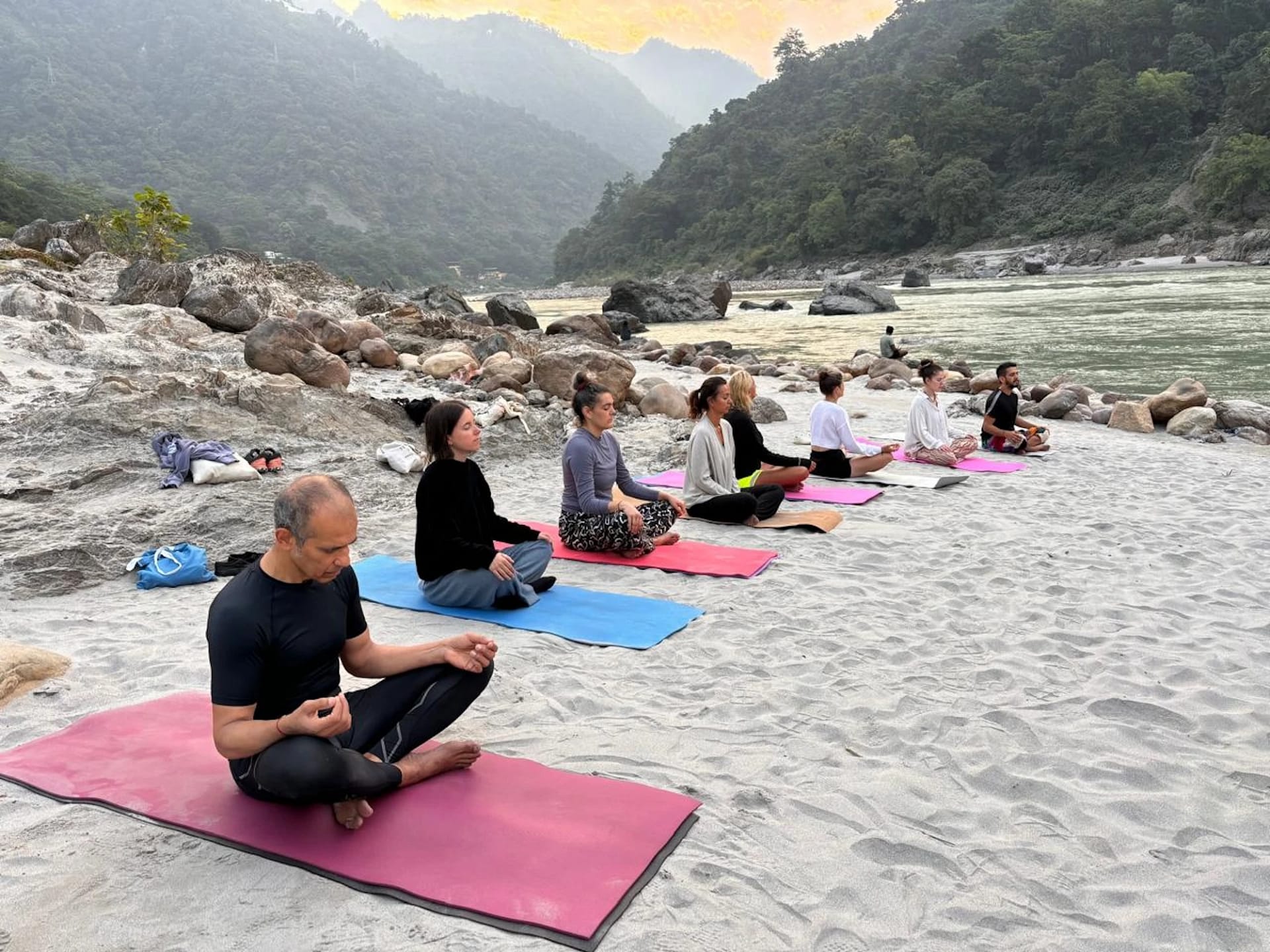
A focused first step into yoga teacher training — build a genuine foundation in asana, pranayama and philosophy, guided by experienced faculty in an authentic riverside ashram on the banks of the Ganges.
Course Overview
Your First Step Into Yoga Teacher Training
Our 100-Hour Yoga Teacher Training is the first half of our Yoga Alliance® RYS 200 program — designed for sincere beginners and practitioners who can’t commit to a full month right away. Over 11–12 immersive days, you’ll study asana, pranayama, meditation, anatomy, Ayurveda and yogic philosophy, guided by experienced faculty.
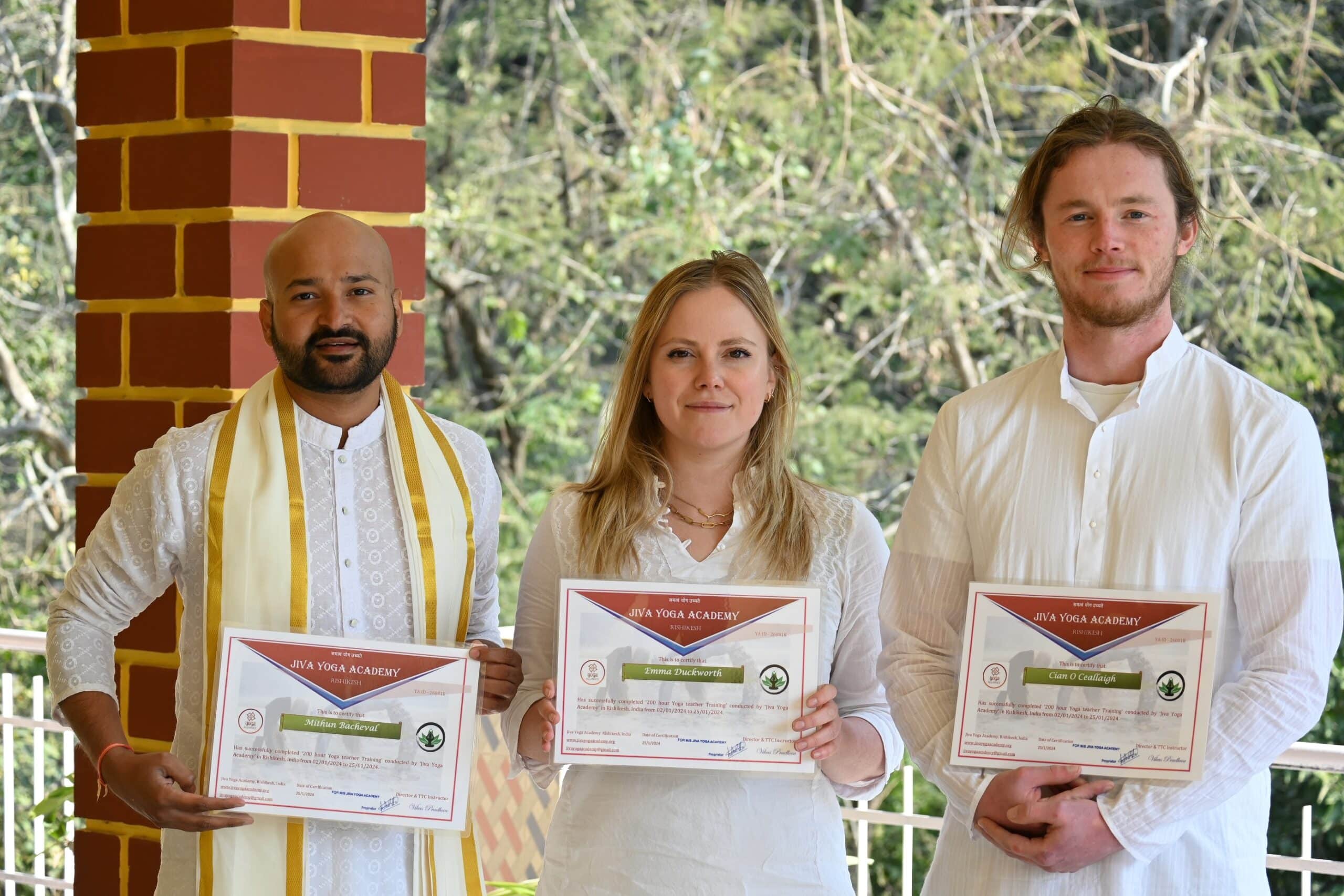
This program does not include a standalone certificate on its own. Return within a calendar year to complete the remaining 100 hours and receive your full 200-hour certificate (eligible for Yoga Alliance RYT-200 registration).
Why This Course
What Makes This Foundation Course Different
01
Small Batch Sizes
8–12 students per batch, so every student gets hands-on, personal attention.
02
Counts Toward Full Certification
Complete this foundation phase now, return later to complete your 200-hour training and certificate.
03
Nature Ashram Stay
Live and practice together in a peaceful setting on the banks of the Ganges.
04
All Meals Included
Three wholesome sattvic vegetarian meals a day, throughout your stay.
05
Personal Mentorship
Direct, ongoing access to experienced teachers — not a crowded classroom.
06
One Excursion
Kunjapuri sunrise trek and the soulful Ganga Aarti ceremony, built into your training.
Curriculum
What You'll Study
A focused curriculum covering the foundational categories of the first half of our Yoga Alliance® RYS 200 program.
Subject by Subject
Curriculum of the 100-Hour Course
A closer look at each subject you’ll study across the 100 hours — from asana and pranayama to philosophy, anatomy and Ayurveda.
An introduction to Ayurveda, the traditional Indian system of wellbeing that works alongside your yoga practice.
- Foundations: the three doshas (Vata, Pitta, Kapha) and how they shape body and mind.
- Assessment: simple diagnostic approaches used to read individual constitution.
- Daily balance: diet, routine and lifestyle habits that support each dosha type.
- Gentle cleansing: an introduction to Panchakarma-inspired practices for everyday wellness.
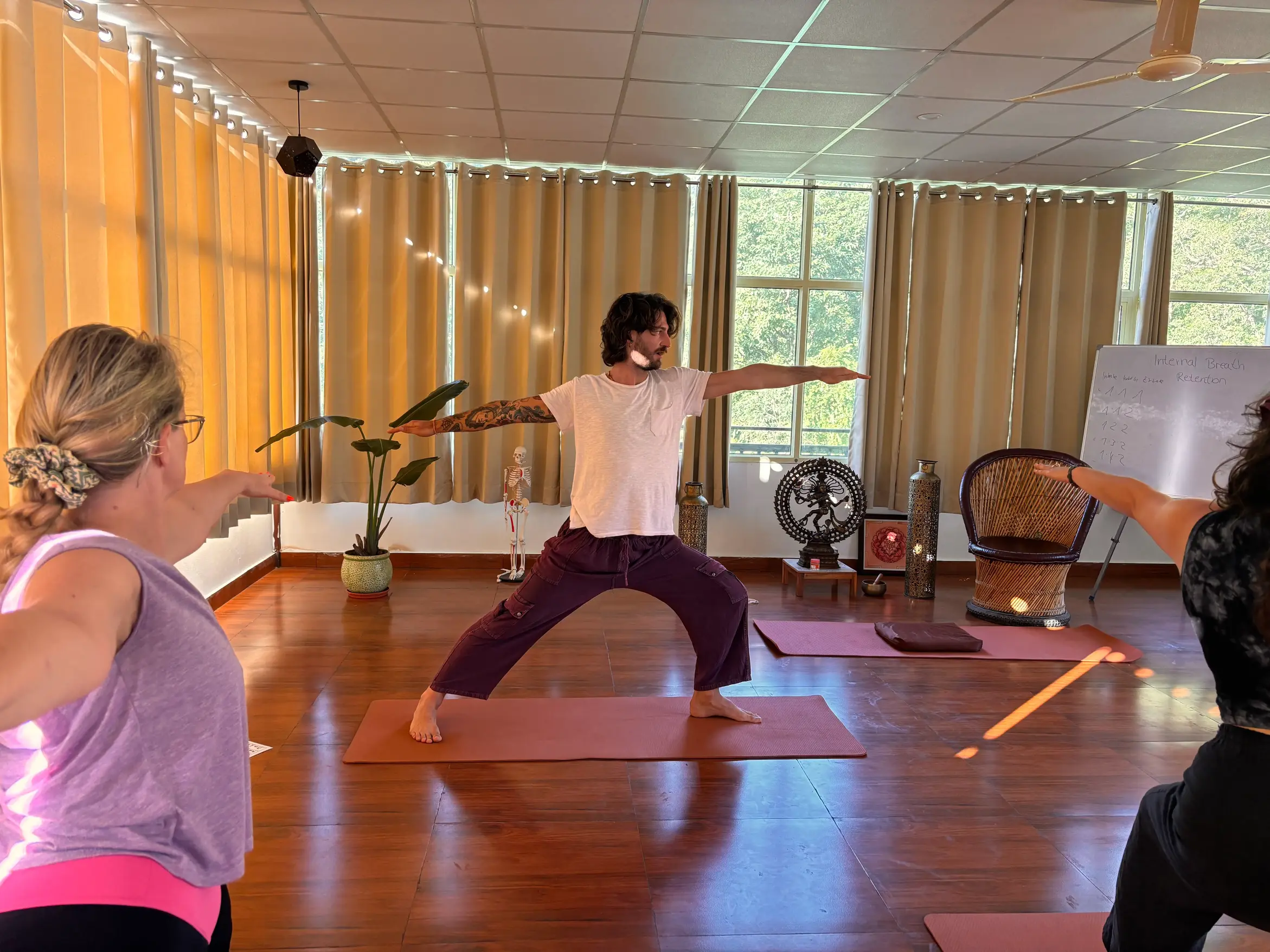
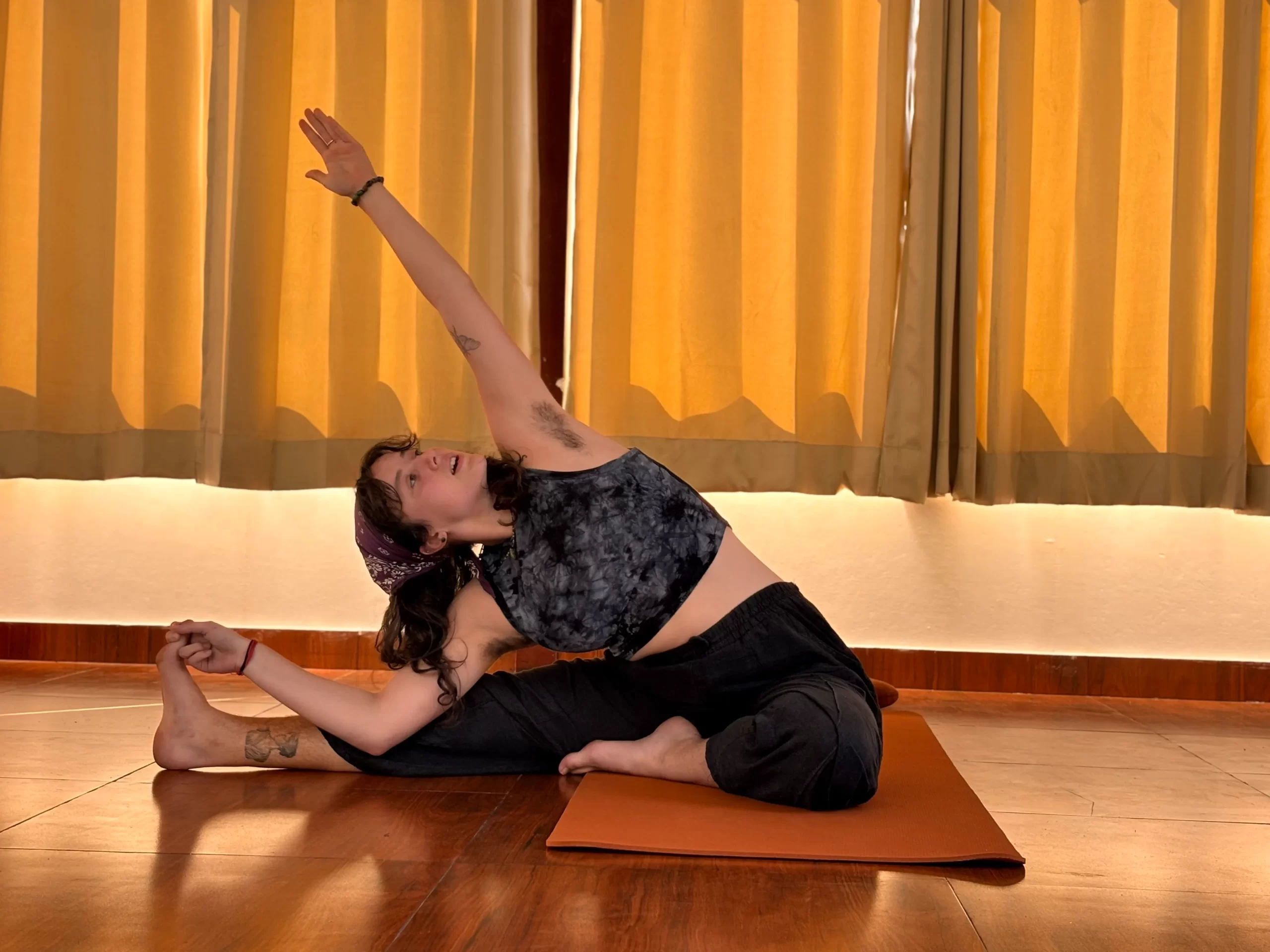
A slow, deliberate style of asana practice suited to every level, including complete beginners.
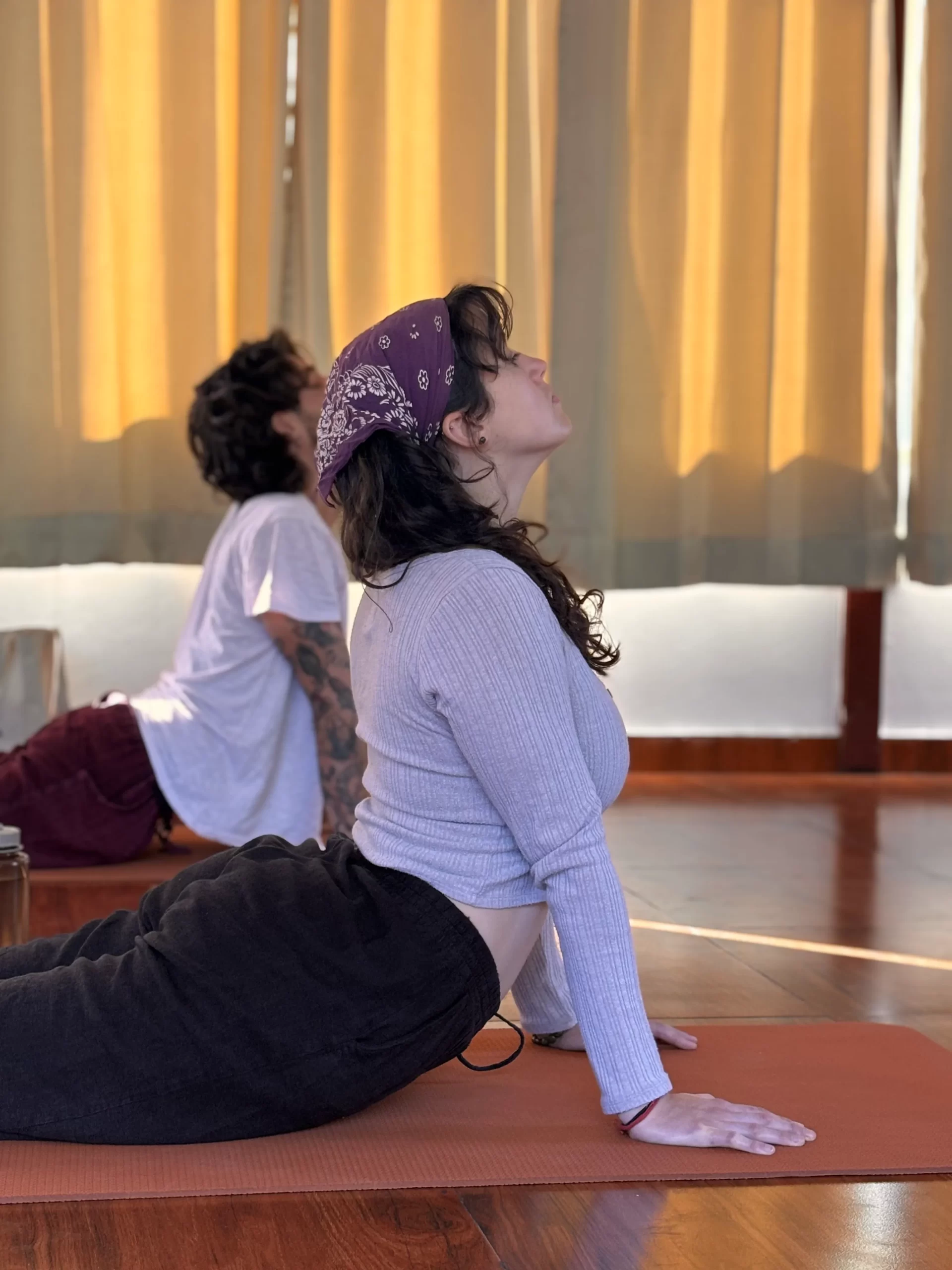
- 30+ postures: sun salutations, standing poses (Tadasana, Trikonasana, Virabhadrasana), seated poses (Padmasana, Sukhasana) and gentle backbends (Ustrasana, Raja Kapotasana).
- Alignment first: holding postures longer to refine form and build body awareness.
- Balance of effort and ease: the classical Hatha pairing of activity and rest.
Breathing techniques that clear the respiratory pathways and steady the mind.
- Core techniques: Ujjayi, Kapalabhati, Nadi Shodhana, Anulom Vilom, Bhramari, Bhastrika, Sheetali, Sheetkari and Surya Bhedana.
- Practical application: sequencing breathwork safely alongside asana and meditation.
A practical grounding in anatomy so every posture is taught and practiced safely.
- Body systems: muscular, skeletal, nervous, respiratory, circulatory, digestive and endocrine systems.
- Movement mechanics: joint actions, fascia and safe transitions between postures.
A dynamic, breath-synchronized practice that builds strength and stamina.
- Sun salutations A & B as the foundation of the sequence.
- Standing postures and seated forward bends linked through continuous vinyasa flow.
The classical philosophical roots that give yoga its deeper meaning.
- Patanjali’s Yoga Sutras and the eight limbs of yoga, from Yama to Samadhi.
- Classical texts: an orientation to the Vedas and other foundational scriptures.
Practical tools for a steady, liberating meditation practice.
- Fundamentals and technique: posture, focus and breath as supports for stillness.
- Approaches: mantra meditation, chakra meditation and guided Yoga Nidra.
An introduction to Shatkarma, the six classical purification techniques.
- Practices include Jala Neti and Rubber Neti (nasal cleansing) and Kapalabhati (skull-shining breath).
- Purpose: clearing the body’s channels to support deeper pranayama and meditation.
Daily Rhythm
A Sample Day on the 100-Hour Course
Times are illustrative — your course coordinator will share the exact timetable for your batch.
Full Week-by-Week Schedule
A detailed, day-by-day breakdown of all 12 days — useful once you’d like to see exactly how the course unfolds, week by week.
01Week 11st – 7th
| Time | 1st Friday | 2nd Saturday | 3rd Sunday | 4th Monday | 5th Tuesday | 6th Wednesday | 7th Thursday |
|---|---|---|---|---|---|---|---|
| 06:00 - 07:00 | – | Pranayama | Pranayama | Pranayama | Pranayama | Pranayama | DAY OFF |
| 07:15 - 08:30 | – | Hatha Yoga | Hatha Yoga | Hatha Yoga | Hatha Yoga | Hatha Yoga | |
| 08:30 | BREAKFAST | BREAKFAST | BREAKFAST | BREAKFAST | BREAKFAST | BREAKFAST | |
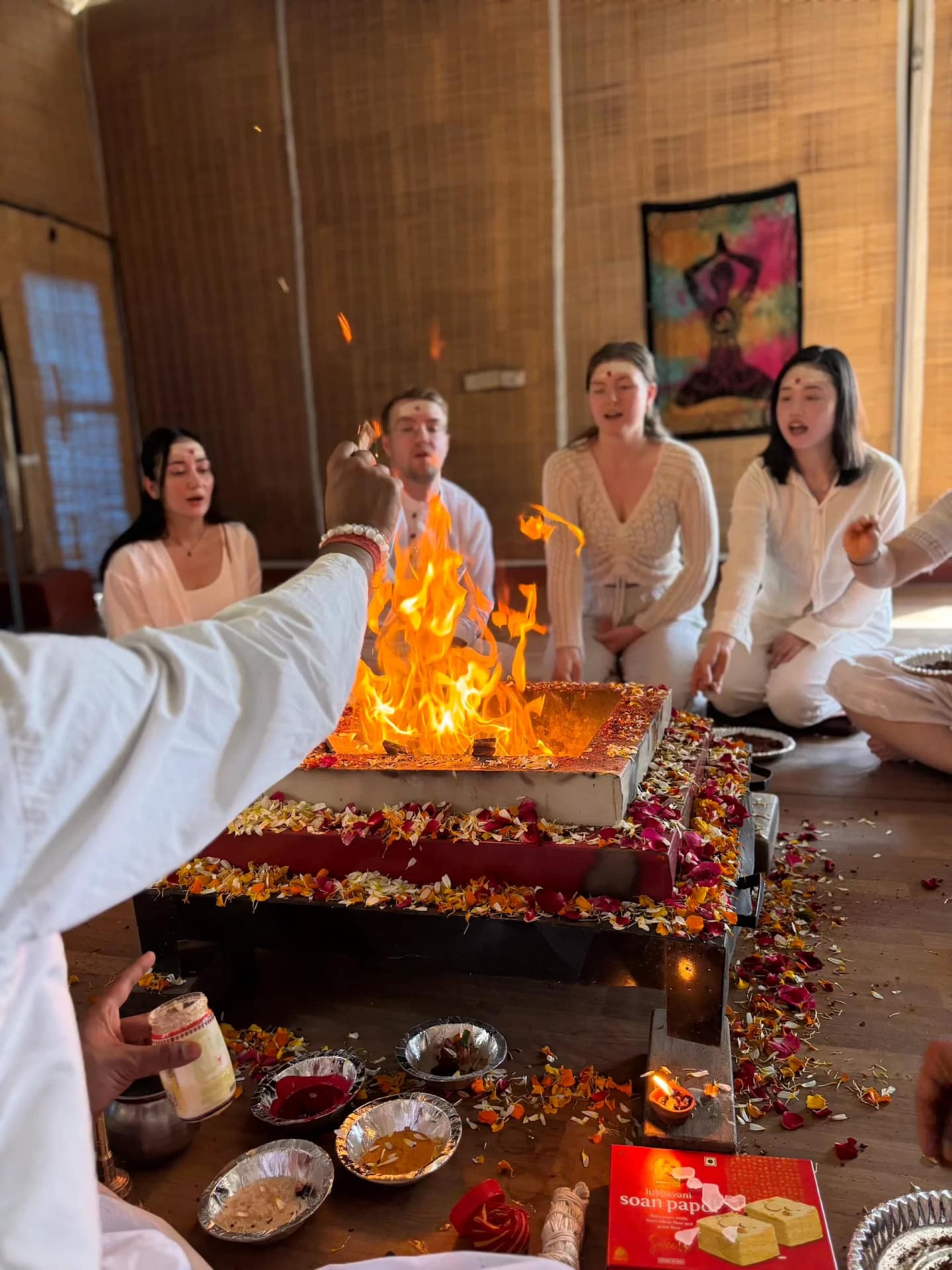
| 10:30 - 11:30 | Fire Ceremony – 10:30 | Adjustment | Adjustment | Adjustment | Adjustment | Adjustment | |
| 12:00 - 13:00 | Philosophy | Philosophy | Philosophy | Philosophy | Philosophy | ||
| 13:00 | LUNCH | LUNCH | LUNCH | LUNCH | LUNCH | LUNCH | |
| 15:00 - 16:00 | – | Ayurveda | Anatomy | Anatomy | Anatomy | Anatomy | |
| 17:00 - 18:15 | Ashtanga Yoga | Ashtanga Yoga | Ashtanga Yoga | Ashtanga Yoga | Ashtanga Yoga | Ashtanga Yoga | |
| 18:20 - 19:20 | Meditation | Meditation | Holistic Healing | Meditation | Meditation | Meditation | |
| 19:20 | DINNER | DINNER | DINNER | DINNER | DINNER | DINNER |
02Week 28th – 12th (Final Days)
| Time | 8th Friday | 9th Saturday | 10th Sunday | 11th Monday | 12th Tuesday |
|---|---|---|---|---|---|
| 06:00 - 07:00 | Pranayama | Pranayama | Pranayama | Pranayama | Pranayama |
| 07:15 - 08:30 | Hatha Yoga | Hatha Yoga | Hatha Yoga | Hatha Yoga | Hatha Yoga |
| 08:30 | BREAKFAST | BREAKFAST | BREAKFAST | BREAKFAST | BREAKFAST |
| 10:30 - 11:30 | Adjustment | Adjustment | Adjustment | Adjustment | Check-Out Any Extra Night: 15 EUR |
| 12:00 - 13:00 | Philosophy | Philosophy | Ayurveda | Philosophy | |
| 13:00 | LUNCH | LUNCH | LUNCH | LUNCH | |
| 15:00 - 16:00 | Anatomy | Anatomy | Anatomy | Anatomy | |
| 17:00 - 18:15 | Ashtanga Yoga | Ashtanga Yoga | Ashtanga Yoga | Ashtanga Yoga | |
| 18:20 - 19:20 | Meditation | Meditation | Holistic Healing | Meditation | |
| 19:20 | DINNER | DINNER | DINNER | DINNER |
- Schedules are subject to change
- Final Day by Day Schedule will be provided before 3 Days of arrival.
Who Should Join
Is This Course Right for You?
- Complete beginners seeking a foundational introduction to yoga
- Practitioners who can't commit to a full month for 200-Hour training
- Those wanting to split their 200-Hour certification into two phases
- Anyone curious about yoga before committing to teacher certification
- Minimum age 18, with reasonable physical fitness
Before You Arrive
Planning Your 100 Hour Yoga Teacher Training in Rishikesh
Who the 100-Hour Course Suits Best
The 100-hour course is a good fit if you have around two weeks free and want a structured, immersive start to teacher training. It covers the same foundations as the first half of our 200-hour program, at the same pace and with the same teachers.
It also suits practitioners who are not yet sure they want to teach. You deepen your own practice now, and decide later whether to continue towards a full teaching qualification.
Batches are kept to 8–12 students, so teachers can adjust postures, answer questions in detail and follow your progress from the first class to the last. This makes the course just as suitable for complete beginners as for regular practitioners who want to refine their alignment and understand the reasons behind each practice, rather than simply following a sequence.
Why Train in Rishikesh?
Rishikesh sits in the foothills of the Himalayas on the banks of the Ganges, and has been a home for yoga and meditation for generations. Ashrams, temples and the evening Ganga Aarti are part of daily life here, which makes it a natural place to focus on practice away from everyday distractions.
Studying here also means learning close to the roots of the tradition, from experienced local teachers who live these practices every day, in a small group where every student is seen and supported.
Life at the Ashram
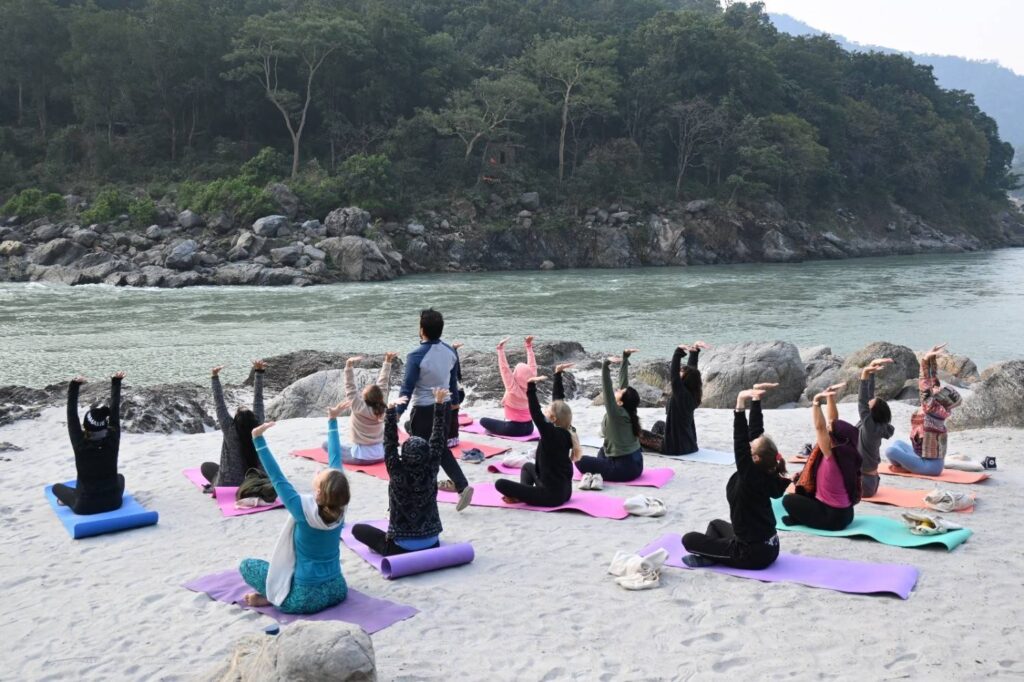
During the course you live at our ashram in Rishikesh, in simple, clean rooms a short walk from the practice hall. Three sattvic vegetarian meals are served each day, so you can give your full attention to practice and study.
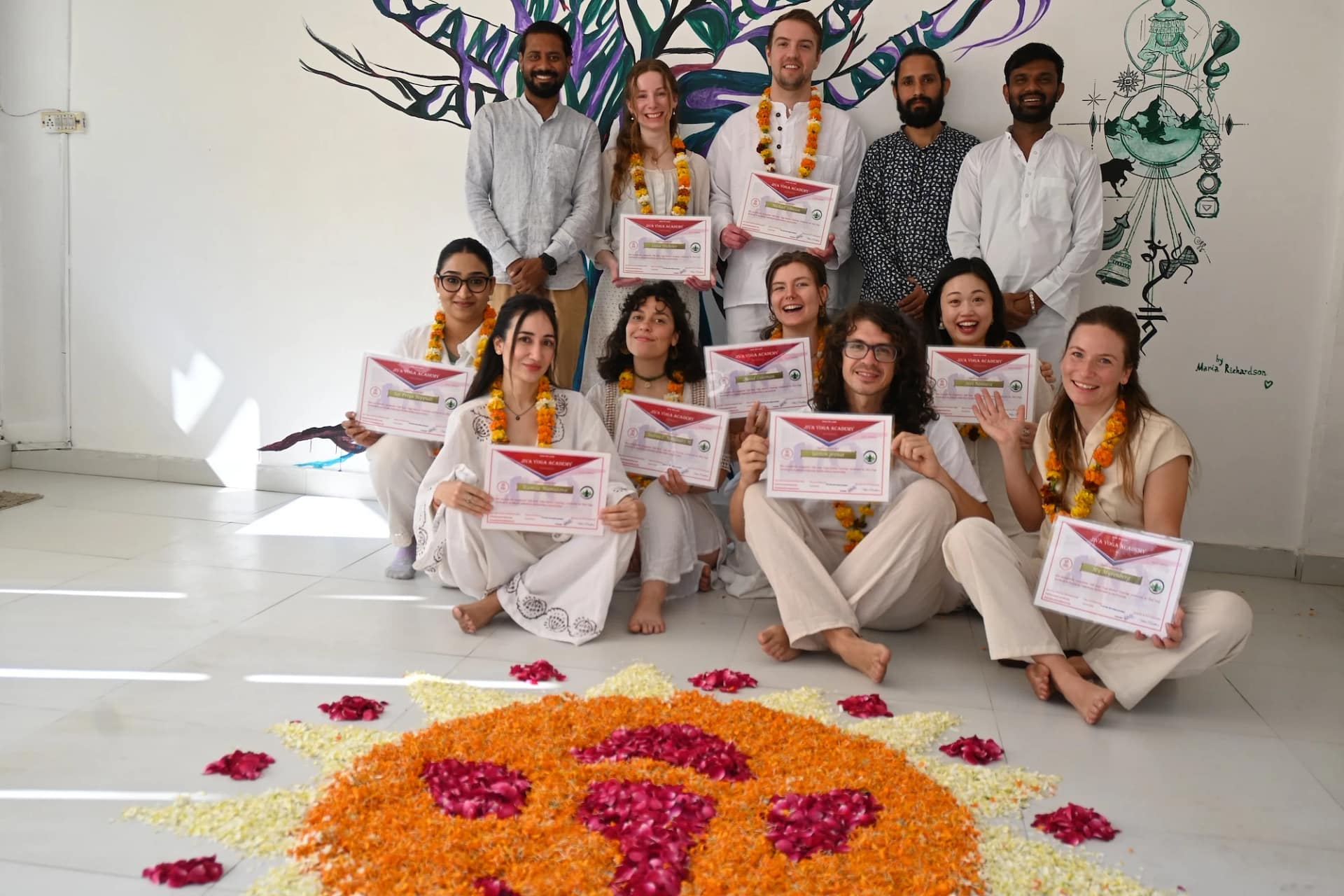
Living together in the ashram creates a supportive rhythm: you practise, eat and study with the same small group, and this shared routine quickly becomes one of the most supportive parts of the experience.
The course also includes one excursion — a sunrise trek to Kunjapuri temple and the Ganga Aarti ceremony on the banks of the river — giving you a chance to see more of Rishikesh beyond the ashram.
How to Prepare
You don’t need an advanced practice to join. A regular routine of a few classes a week in the months before you arrive will help your body settle into the daily schedule more easily.
Days begin early with pranayama and close with evening meditation, so it helps to start going to bed and waking a little earlier in the week before the course.
If you’d like to read ahead, start with “Asana, Pranayama, Mudra and Bandha”, the text recommended in our FAQ. Bring comfortable practice clothes, a notebook, a refillable water bottle and a few warm layers for cool mornings.
Check the visa requirements for your country early — our Visa & Safety guide explains the basics for international students.
Completing Your 200 Hours
The 100 hour yoga teacher training in Rishikesh is designed as phase one of our Yoga Alliance® registered 200-hour program. Return within a year to complete the remaining 100 hours, and you receive your full 200-hour certificate, eligible for Yoga Alliance RYT-200 registration.
Use the time in between to keep a steady personal practice and try guiding a few short sessions for friends or family. Doing this makes the second half of the training feel more natural and rewarding.
If you already know you want the full qualification in one go, take a look at our 200 hour yoga teacher training. You can read more about the standards behind it on the Yoga Alliance website.
Not sure which course is right for you? Contact our team — we’re happy to help you choose the right batch. You can also reach us on WhatsApp or by phone for a quick answer about dates, rooms and fees.

Meet Our Team
Our Teachers in Rishikesh
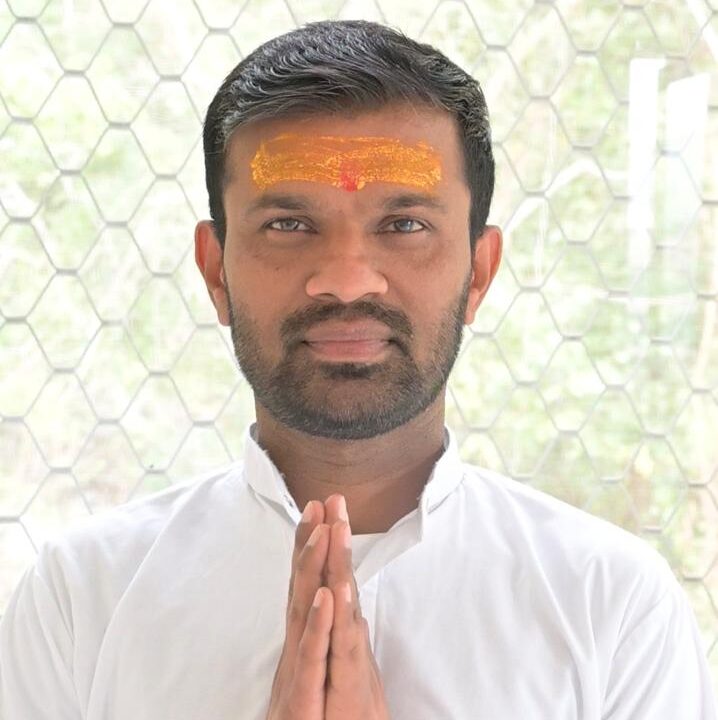
Vikash Kumar
Ashtanga & Philosophy
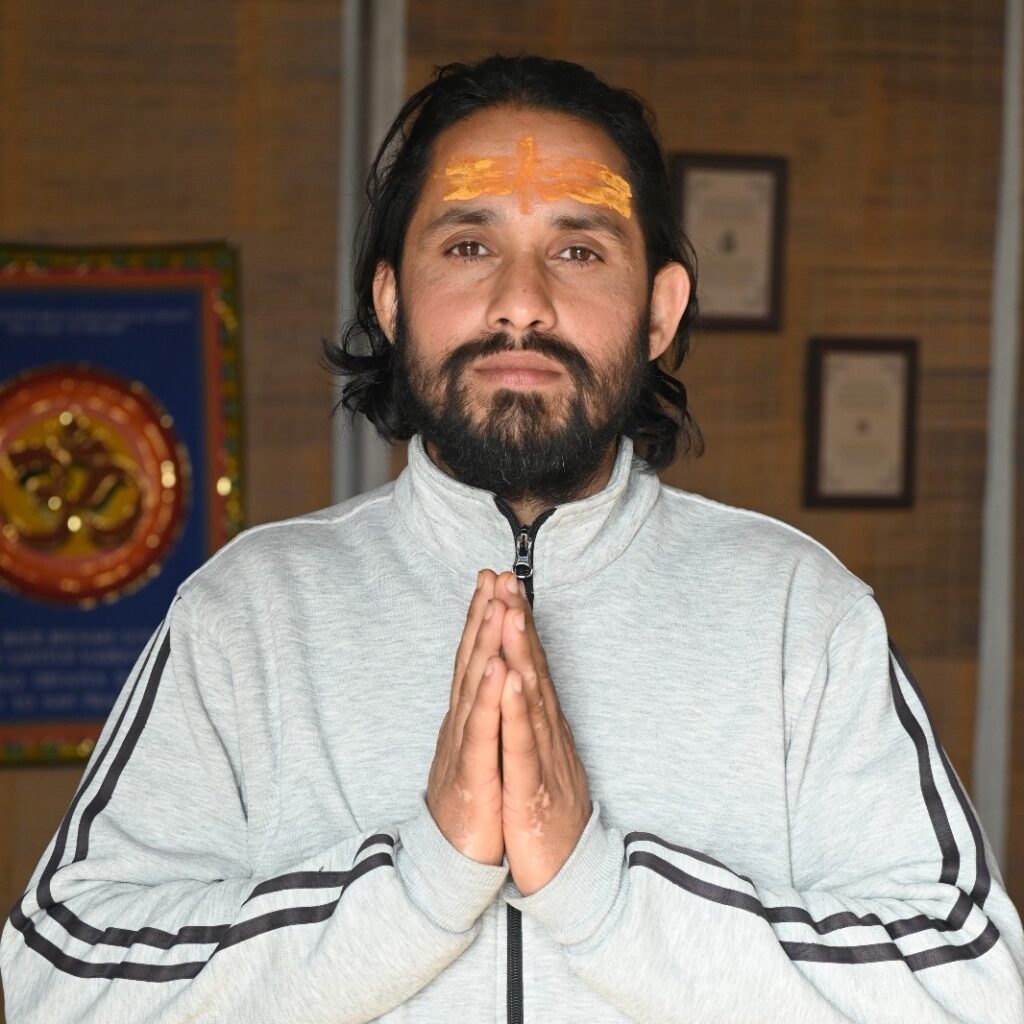
Bhupendra Nautiyal
Pranayama
Yogini Vijaya
Hatha Yoga & Alignment
Kushal Bisht
Yogic Anatomy
Yogi Ankur
Meditation & Reiki
Where You’ll Stay
Meals & Accommodation
Stay in comfortable ashram-style rooms just steps from the practice hall, with three sattvic vegetarian meals served daily. Choose from private rooms, budget private rooms, or single occupancy — every option is clean, simple, and built for a focused, restful training experience.
- Private & Budget Private Room Options
- Three Sattvic Vegetarian Meals Daily
- Free Wi-Fi & Laundry Service


Part of a Yoga Alliance® Registered School
This 100-Hour foundation is the first half of our Yoga Alliance® RYS 200 registered program. It does not carry a standalone certificate, but every hour counts toward your RYT-200 certification when you complete the second half.
- Counts Toward RYS 200 Registration
- No Standalone Certificate — Phase 1 of 2
- Return Within a Year to Complete Certification
Course Inclusions
Everything You Need, Taken Care Of
- Shared or private ashram-style accommodation (11–12 days)
- Three sattvic vegetarian meals a day, plus chai
- Yoga kit: mat, neti pot, notebook & textbook
- Free Ayurveda classes included
- Outdoor excursions (Kunjapuri sunrise trek, Ganga Aarti)
- Airport pickup from Dehradun (Jolly Grant)
Investment
Course Fee & Upcoming Batches
Course fees and upcoming start dates. Contact our admissions team to confirm seat availability.
Testimonials
What Our Students Say
Ready to Begin Your 100-Hour Journey?
Join a global community of graduates who trained with real attention, in a place built for genuine transformation.
Good to Know
Frequently Asked Questions
A few quick answers — reach out any time if you’d like to know more before enrolling.